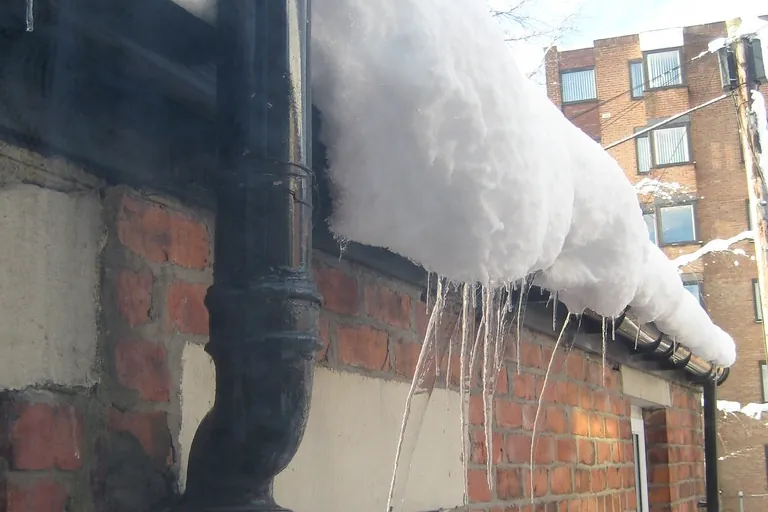
Utah winters can deliver months of snow on the same roof. The 2022–23 season set records across northern Utah, and claims for collapsed carports, sagging roofs and ice-dam leaks followed. Here’s how to approach those claims.
Snow load: what to look for
- Sagging ridgelines or rooflines
- New cracks in drywall, especially near ceilings and door frames
- Doors and windows that suddenly stick
- Cracked or bowed rafters and trusses visible in the attic
- Damaged carports, patio covers, decks and outbuildings
If you suspect structural damage, stay safe and get the roof evaluated before anyone climbs on it. An engineer’s report can become an important part of the claim.
Ice dams: where the water goes
When warm attic air melts snow on the roof, water runs down to the cold eaves and refreezes, creating a dam. Meltwater then backs up under shingles and into walls, ceilings and insulation. The visible stain is usually a fraction of the damage.
What estimates commonly miss
- Wet insulation and vapor barriers in attics and exterior walls
- Drying and mold prevention inside wall cavities
- Ice-and-water shield along eaves when roofing is replaced
- Structural repair and engineering costs for snow load
- Interior finishes removed to dry the structure
Coverage wrinkles
Many policies cover sudden water damage from ice dams and collapse from the weight of snow and ice, but they may exclude the ice dam itself, gradual leaks or maintenance issues. Read your policy’s collapse and water damage provisions.
To estimate what a roof was carrying, try our roof snow load estimator. Example figures it produces are illustrative, not engineering conclusions.